3D Laser Cut Notebook Cover Review
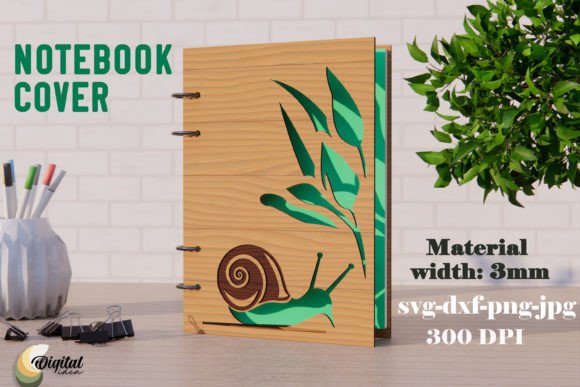
When I first opened the folder for 3d Laser Cut. Notebook Cover Laser Cut, my immediate reaction was a mix of curiosity and skepticism. As someone who has reviewed thousands of embroidery files, I know that "laser cut" aesthetics in digital design often promise a level of precision that standard machine stitching struggles to replicate. However, this file is not just another generic clipart vector; it is a structured machine embroidery design intended to mimic the clean, sharp edges of a die-cut or laser-cut notebook cover. It falls squarely into the Crafts category under Graphics, but its application extends far beyond simple decoration. This review breaks down how this embroidery file performs in real-world scenarios, from custom apparel to high-end boutique merchandise.
First Impressions: The Visual Personality
The mood created by 3d Laser Cut. Notebook Cover Laser Cut is distinctly modern, minimalist, and architectural. Unlike traditional floral or script designs that rely on softness and organic flow, this design leans into geometric precision. The visual personality suggests order, creativity, and professional organization. For an embroidery project aimed at students, professionals, or creatives, this aesthetic hits the right note. It feels less like a decorative flourish and more like a structural element of the garment or accessory itself.
From a designer’s perspective, the layout is balanced. It does not scream for attention with loud colors or chaotic shapes; instead, it offers a sophisticated anchor point for a larger composition. When placed on a plain canvas tote bag or the chest of a sweatshirt, it provides a focal point that feels intentional rather than accidental. This is crucial for brand consistency when you are building a shop identity. Buyers today look for items that feel curated, and this design delivers that sense of deliberate style.
Real-World Application: Where Does It Shine?
I tested the concept of using 3d Laser Cut. Notebook Cover Laser Cut across several potential product categories to see where it truly excels. The most compelling use case I found was for personalized gifts targeting students and young professionals. Imagine a custom embroidered tote bag made of heavy-duty cotton duck. Placing this design centrally creates a striking contrast between the rugged texture of the fabric and the crisp, simulated 3D lines of the notebook cover motif. It speaks directly to the target audience—people who value their notebooks and their organization.
Beyond totes, this embroidery file works exceptionally well as an embroidered patch style applique on denim jackets or backpacks. The geometric nature of the design allows it to stand up well even on textured fabrics like twill or denim. I also envision this being a standout item for holiday embroidery campaigns. A white notebook cover design stitched in gold or silver thread on a dark navy sweatshirt creates a festive yet elegant look that appeals to adults looking for unique, non-traditional holiday gifts.
For Etsy sellers and small shop owners, this design offers versatility. It can be adapted into a series of products: a kitchen towel for the home chef who loves recipes, a pillow cover for a home office, or even a baby embroidery piece for a nursery theme centered around learning and growth. The adaptability of the graphic means you are not limited to one product type, which is a huge advantage for maximizing your design assets.
Technical Performance and Stitching Considerations
While the visual appeal is strong, the technical execution requires careful planning. The term "3D Laser Cut" implies depth and sharp angles. In reality, unless you are using specialized foam underlay techniques, the machine will interpret these lines through various stitch types. You need to analyze how the satin stitch handles the corners. Tight corners in satin stitches can sometimes pucker if the density is too high or if the needle penetration points are too close together.
It is vital to check the stitch density before committing to a production run. If the design uses dense fill stitches to create the body of the notebook, ensure your fabric can support that weight without distorting. On thin fabrics, such as lightweight polyester blends used in some athletic wear, this design might cause significant puckering. In such cases, a tear-away stabilizer might not be enough; you may need a cut-away stabilizer to maintain integrity during washing.
Another critical factor is thread colors. To achieve the "laser cut" illusion, color choice is paramount. A monochromatic scheme (e.g., white thread on black fabric) emphasizes the shape and outline, making it look more like a stencil or cutout. Using multiple colors can add dimension but risks muddying the clean lines if not chosen carefully. I recommend testing different thread combinations to see which best preserves the geometric clarity of the 3d Laser Cut. Notebook Cover Laser Cut design.
Where to Use With Caution
Not every surface is suitable for this design. Due to its detailed nature, 3d Laser Cut. Notebook Cover Laser Cut should be used carefully on small hoop sizes. If the design is scaled down too much, the fine details of the notebook spine and page edges may become indistinguishable, resulting in a blobby appearance rather than a crisp graphic. Always inspect small details after digitizing or loading the file to ensure they remain legible.
Avoid placing this design on highly textured fabrics like chunky knits or bouclé wool. The uneven surface will disrupt the stitch path, leading to skipped stitches or misalignment. Similarly, stretchy fabrics require extra stabilization. Without proper support, the tension of the running stitch or fill stitch can distort the knit, causing the design to warp over time. Curved surfaces, such as the front panel of a baseball cap, also pose a challenge. While possible, it requires precise hooping and potentially a curved hoop adapter to prevent distortion at the edges.
Practical Designer Notes for Success
Before you start producing finished products with 3d Laser Cut. Notebook Cover Laser Cut, follow these practical steps to ensure quality:
- Test on scrap fabric: Never go straight to your final product. Stitch the design on the exact fabric and stabilizer combination you plan to use. This reveals issues with tension, puckering, or color contrast early.
- Check thread color contrast: Ensure the thread stands out clearly against the background. Low contrast can make the design look muddy or unfinished.
- Review stitch density: High density adds durability but can make the fabric stiff. Balance this based on the end-use of the product. For a tote bag, higher density is acceptable; for a t-shirt, lighter density is preferable.
- Confirm hoop size: Make sure your machine’s hoop is large enough to accommodate the design without needing to re-hoop, which can lead to alignment errors.
- Inspect small details: Zoom in on the digital preview. Are the page lines distinct? Is the zipper detail clear? If details are lost in the preview, they will likely be lost in the stitch-out.
- Test in black and white: Convert the design to grayscale to check its silhouette. If the shape reads clearly in black and white, it will likely work well in color.
- Compare light and dark backgrounds: Test the design on both light and dark fabrics to see how the negative space interacts with the material.
- Use proper stabilizer: Match the stabilizer to the fabric weight. Heavy fabrics need heavy stabilizers; light fabrics need lightweight ones.
- Check licensing: Confirm whether the file allows for commercial use. Selling finished items requires a commercial license, while creating personal gifts usually does not.
Final Verdict
3d Laser Cut. Notebook Cover Laser Cut is a versatile, stylish, and commercially viable digital embroidery file. It bridges the gap between graphic design and textile art, offering a modern aesthetic that resonates with contemporary buyers. Its strength lies in its clean lines and adaptable theme, making it suitable for a wide range of handmade products from custom apparel to personalized gifts. By paying attention to stitch density, fabric selection, and stabilization, designers can produce high-quality finished products that justify a premium price point. For craft business owners looking to expand their catalog with trendy, organized-themed items, this design is a solid addition to their portfolio.